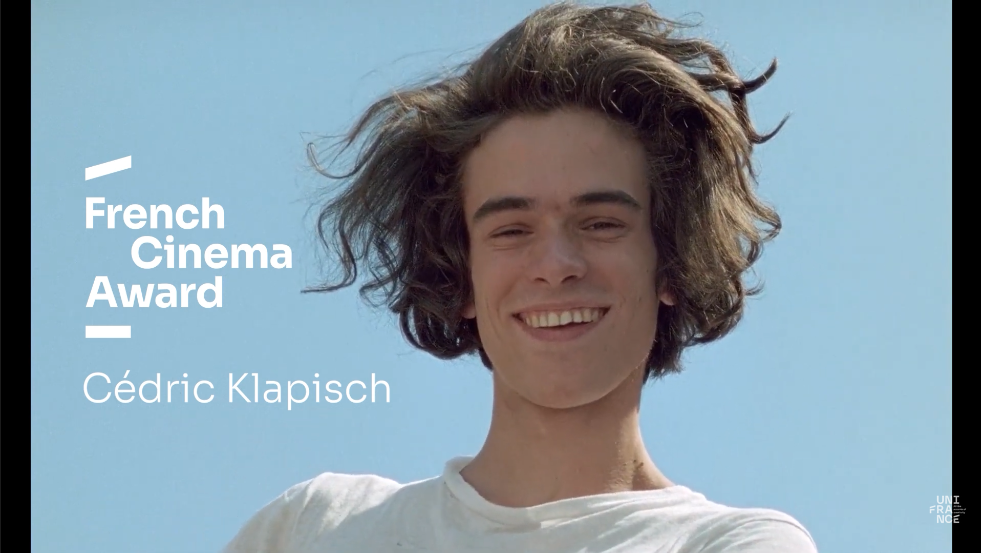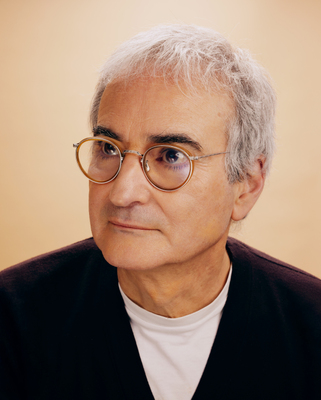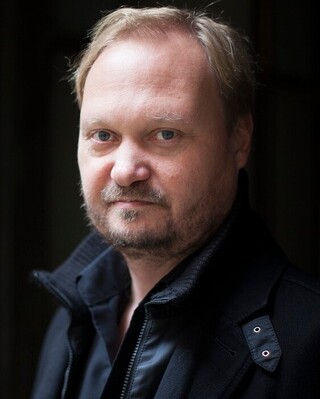
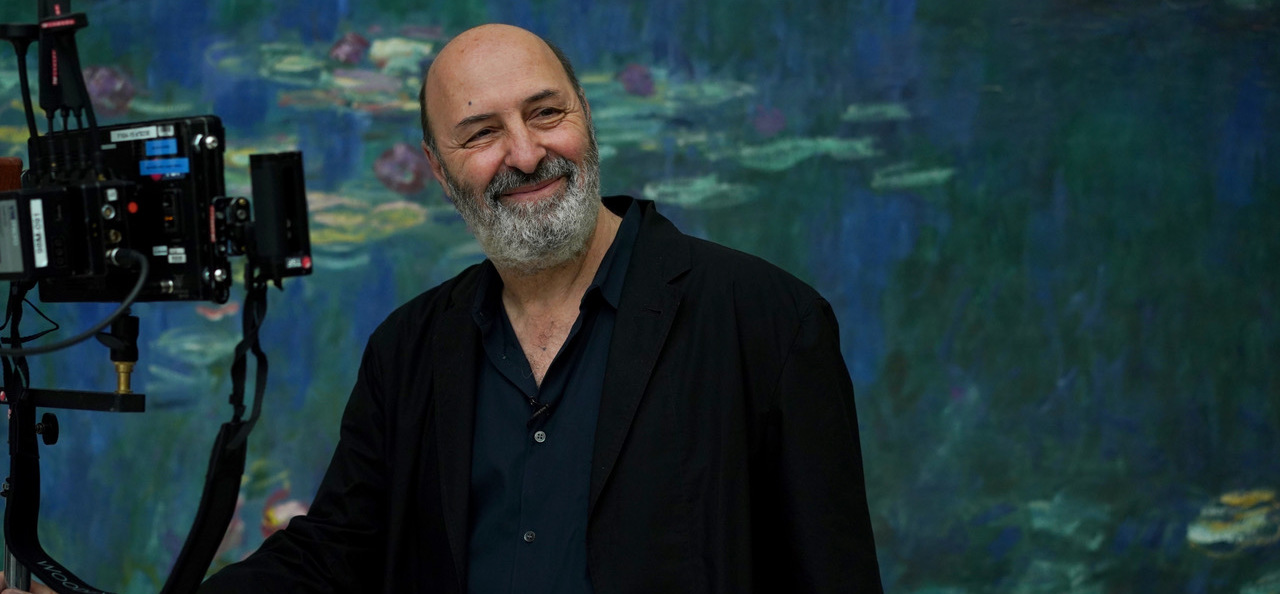

Cédric Klapisch tender and universal cinema has long been popular with foreign audiences, with his films regularly distributed and acclaimed by viewers outside France. Unifrance will present him with a French Cinema Award on January 15th at the French Ministry of Culture.
Created in 2016 by Unifrance, the French Cinema Award (designed by Jean Lamore for Maison Daum*) is intended to pay tribute to a leading French personality who has made a significant contribution to promoting French cinema around the world.
After studying literature and cinema at university in Paris, Cédric Klapisch went to study in the United States at New York University, where he obtained a Master of Fine Arts and directed several short films. This American experience played an important role in his career as a filmmaker, opening him up to a more international approach, but also to a cinema of everyday life accessible to a wide audience. Back in France, in 1989 he directed his famous short film Ce qui me meut, a tribute to the pioneers of cinema, which won him several prestigious awards (including the Audience Award at the Cannes Film Festival and the Special Jury Prize at Clermont-Ferrand). The film also gave its name to his production company, which is still active today under the leadership of producer Bruno Lévy. He then moved on to feature films with Little Nothings, nominated for the César Awards in 1992.
The filmmaker became known to a wide audience in the 1990s with Good Old Daze, co-written with his lifelong friend Santiago Amigorena (with whom he would go on to collaborate numerous times, and who discovered Romain Duris, who would become one of Klapisch's favorite actors). This was followed by When the Cat's Away and Family Resemblances, based on the play by Agnès Jaoui and Jean-Pierre Bacri, which established his style based on keen observation of human relationships and social groups.
However, it was in the early 2000s that his fame spread far beyond France's borders. In 2002, Pot Luck enjoyed significant international success, particularly in Europe, becoming an iconic film for students and the Erasmus spirit. The film was widely distributed abroad, followed in movie theaters by Russian Dolls and Chinese Puzzle, and, in 2023, by the series Salade grecque, confirming the international audience's attachment to Klapisch's characters, and even to their descendants!
Klapisch went on to pursue a career marked by ensemble films and universal themes, such as Paris, Back to Burgundy, Someone, Somewhere, and Rise, which were regularly screened at international film festivals. He has thus established himself as one of the most recognized contemporary French directors outside France, capable of reaching a global audience thanks to universal subjects such as the passage of time, youth, identity, work, art, and human connections.
According to figures compiled by Unifrance, Cédric Klapisch's films have so far attracted 8,920,000 admissions internationally.
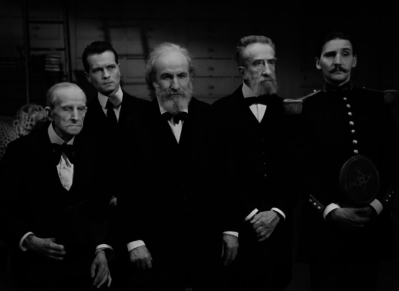
His latest feature, Colours Of Time, which features the cream of French film talent (both established and up-and-coming) and was a huge hit in France with over 900,000 admissions, has been sold in nearly forty countries.
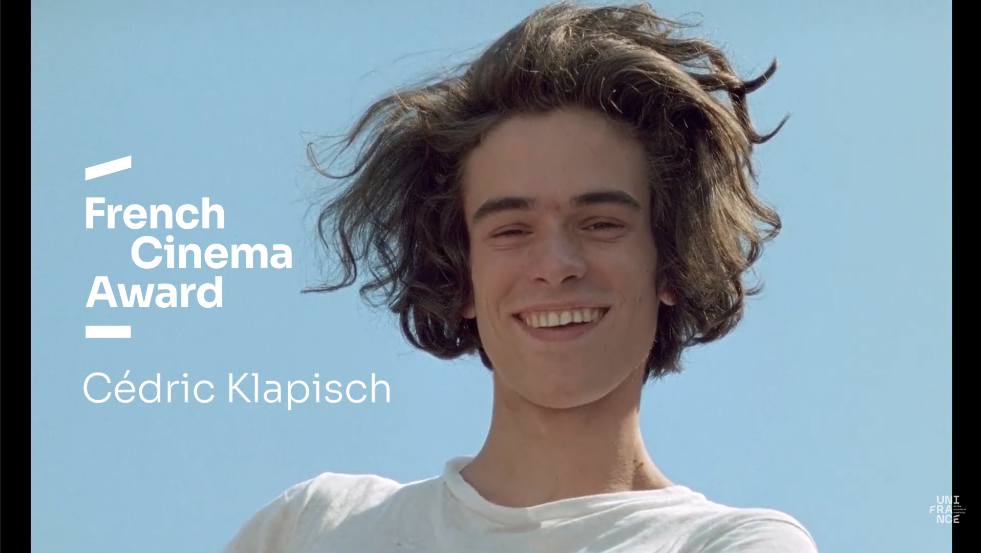
The tribute clip to Cédric Klapisch's career and works
to watch by clicking on the image below ⬇️
The French Cinema Awards since 2016
2016
- Producers Aton Soumache and Dimitri Rassam (The Little Prince)
- Italian distributor Andrea Occhipinti (Lucky Red)
2017
- Actress Isabelle Huppert
- German distributor Torsten Frehse (Neue Visionen Filmverleih)
- Chinese distributor La Peikang (China Film Group)
2018
- Actress Juliette Binoche
- Director of the Chineses Cinémathèque Sun Xianghui
- Spanish distributor Adolfo Blanco Lucas (A Contracorriente Films)
2019
- Directors Olivier Nakache and Éric Toledano
2020
- Director Olivier Assayas
- Jane Shao, president and founder of Lumière Pavilions, a movie theater chain in China
2023
- Actress Virginie Efira
2024
- Actor Melvil Poupaud
2025
- Director Rebecca Zlotowski
* Art is the visible expression of emotions, a universal language. It is even “made to disturb,” according to Braque. To evoke Daum is to awaken memories of an ancestral art form. It also bears witness to an unbreakable bond with the art world, through more than 400 collaborations (Armand, Braque, Dalí, Mesnager, and Kongo, to name but a few). Through the French Cinema Award, Maison Daum wanted to highlight the brilliance of a magical piece representing the wings of an angel in white crystal, designed by Jean Lamore, a true symbol of the pure emotion of aesthetic pleasure.
Media Gallery