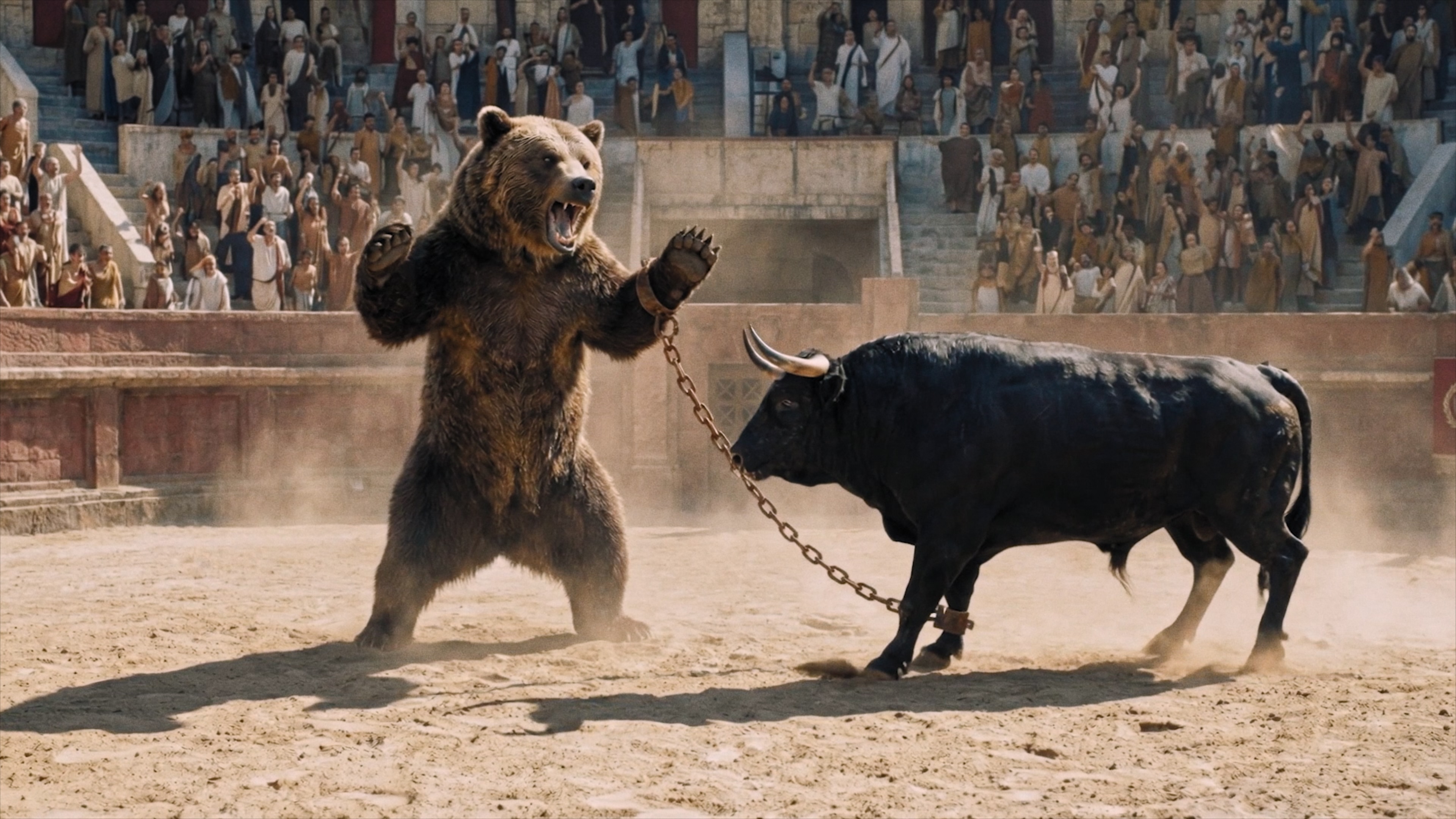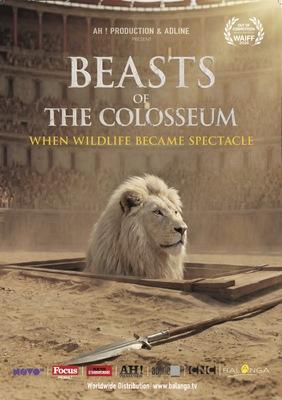
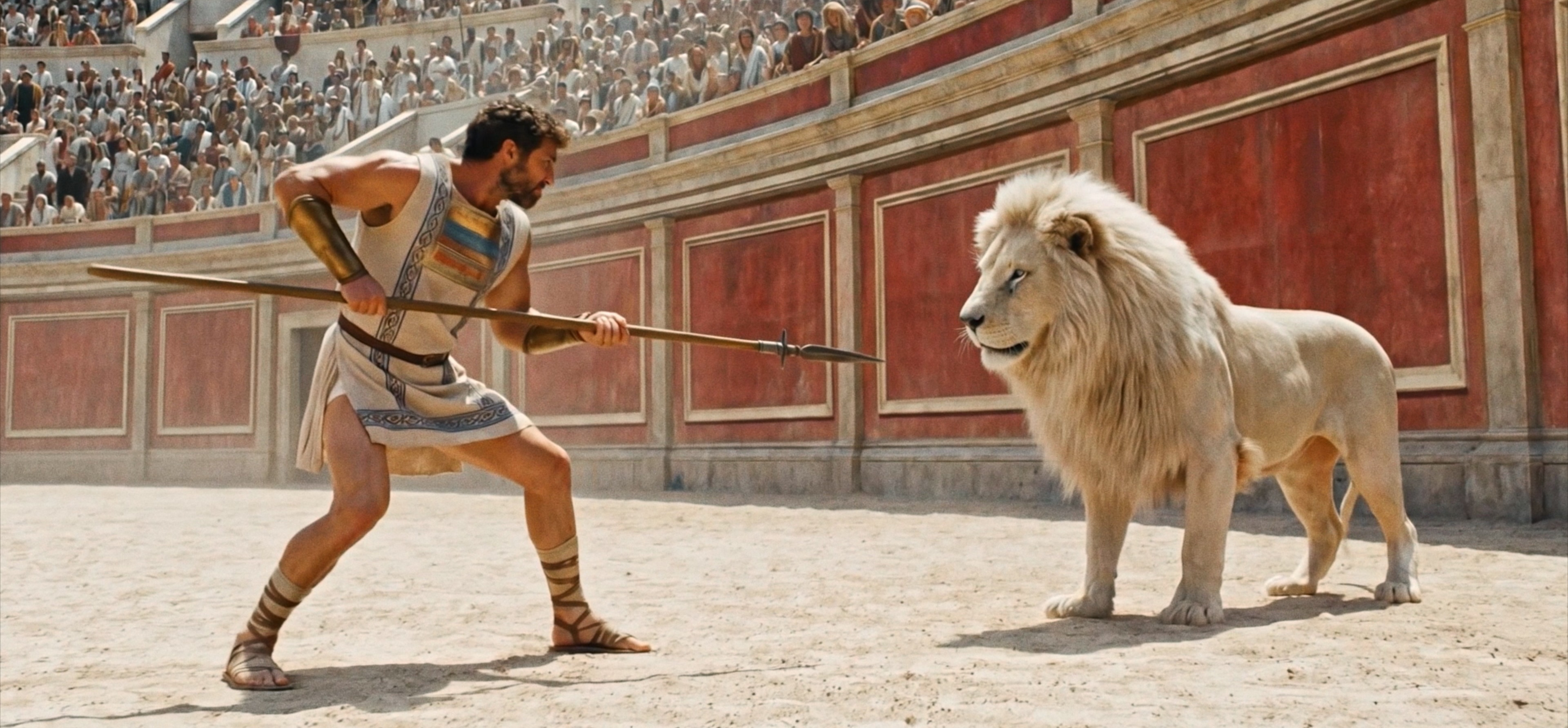

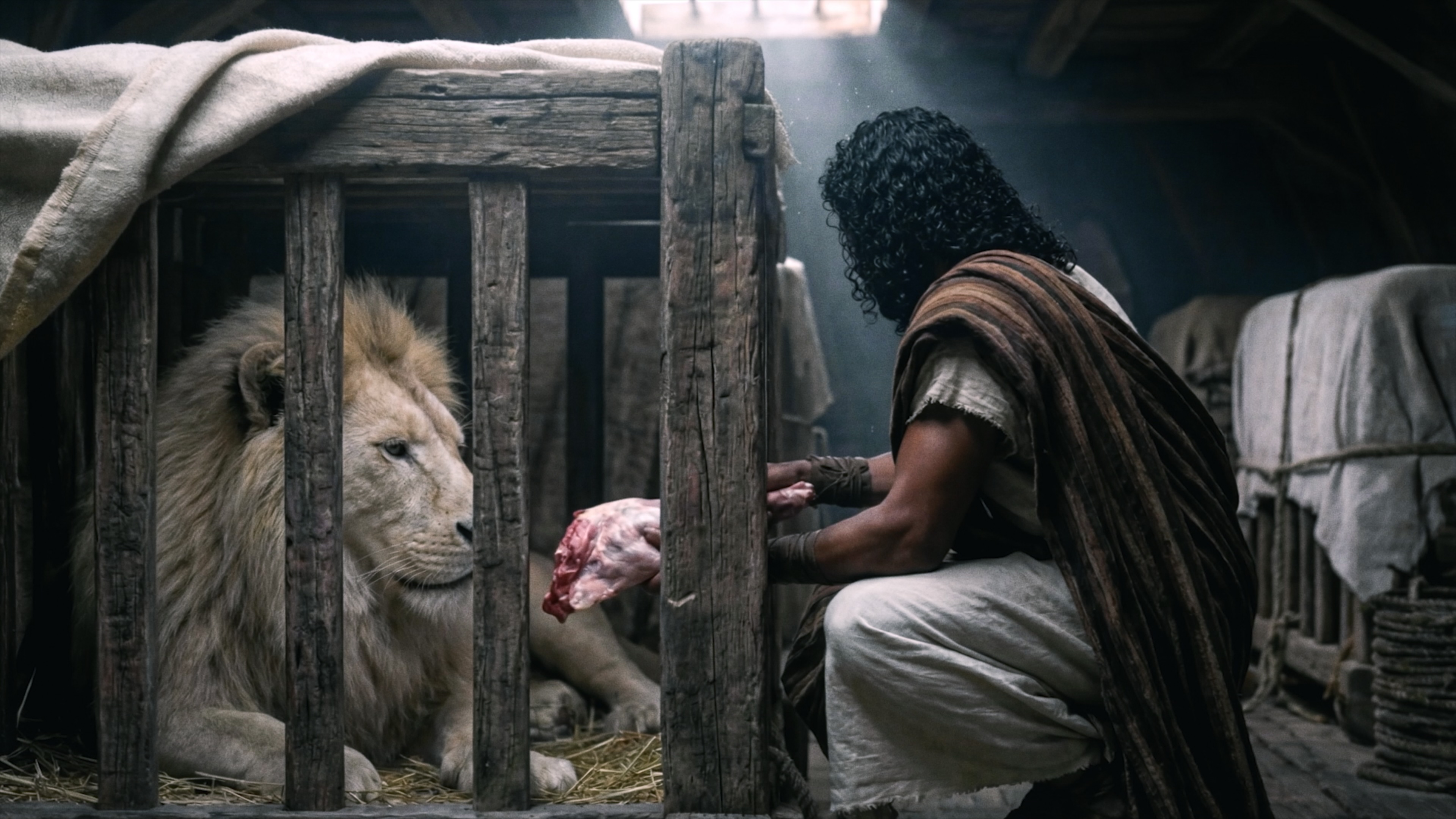
Beasts of the Colosseum tells a little-known story of the Roman Empire: that of an organization which captured, transported, and delivered thousands of wild animals to the arenas. Through the stories of a hunter, a slave, and a lion, the documentary reveals the inner workings of this industry, which contributed to one of the first human-caused extinctions of animal species, echoing today’s environmental challenges. Combining immersive reconstructions made possible by artificial intelligence with rigorous historical research, the film blends visual ambition with editorial rigor. Presented at a screening organized as part of the Unifrance Rendez-Vous in Le Havre, it has already been sold to several countries, including Germany, Canada, Italy, and Sweden, and is set to continue its international rollout in the Middle East and Asia.
Producer Enora Contant (AH! Production) and distributor Christophe Bochnacki (Balanga) look back at the origins and unique features of this ambitious project, as well as the opportunities it opens up for a new generation of historical documentaries.
Unifrance: Could you tell us about the development of Beasts of the Colosseum and how the various collaborators behind the project came on board?
Enora Contant: This is a story I’ve wanted to tell for many years, but the scale of the reconstructions meant that, until now, producing it as a documentary had been virtually impossible. The advent of artificial intelligence has changed the game, finally giving us the means to bring this project to life with the visual ambition it deserved.

The real catalyst was the launch of the Novo 19 channel and the commitment of its managing director, Guénaëlle Troly, who believed in the project’s potential and made it a reality.
Our shared ambition was to produce a spectacular documentary, accessible to as wide an audience as possible and conceived from the outset for both French and international viewers. Christophe Bochnacki, our distributor, was involved right from the start, both in securing funding and providing editorial support. His knowledge of international markets proved invaluable for preserving the narrative and visual styles that are the strength of productions intended for export.
Meeting Jean-Luc Berlot, a fiction producer at Adline, was also pivotal. He contributed to the film’s financing whilst bringing a perspective rooted in scripted content, which proved particularly useful in strengthening the narrative structure and the cinematic quality of the story.
It is this synergy of perspectives and expertise that has enabled the project to take shape and realize its ambition, straddling the line between historical documentary and grand spectacle.
The documentary sheds light on a little-known chapter in the history of the Roman Empire: that of an organization which captured and transported thousands of wild animals to the Roman arenas. Why was it important for you to tell this story today?
E.C.: We tend to view great civilizations through the lens of their conquests, monuments, or cultural achievements, sometimes forgetting the darker chapters of their history—the ones that tarnish the fascinating image we’ve preserved of them.
Rome embodies organizational genius and the grandeur of an empire, but behind the splendor of the Colosseum lay a veritable industry of capturing, transporting, and killing wild animals, mobilizing considerable resources across the entire Empire.
What interested me was revealing this other, lesser-known facet of Roman civilization—one that is just as revealing of how it functioned and its relationship to the world.
For me, historical documentaries aren’t just for understanding the past. They also allow us to examine our present and the choices we make today, so we can better understand where we might be headed tomorrow.
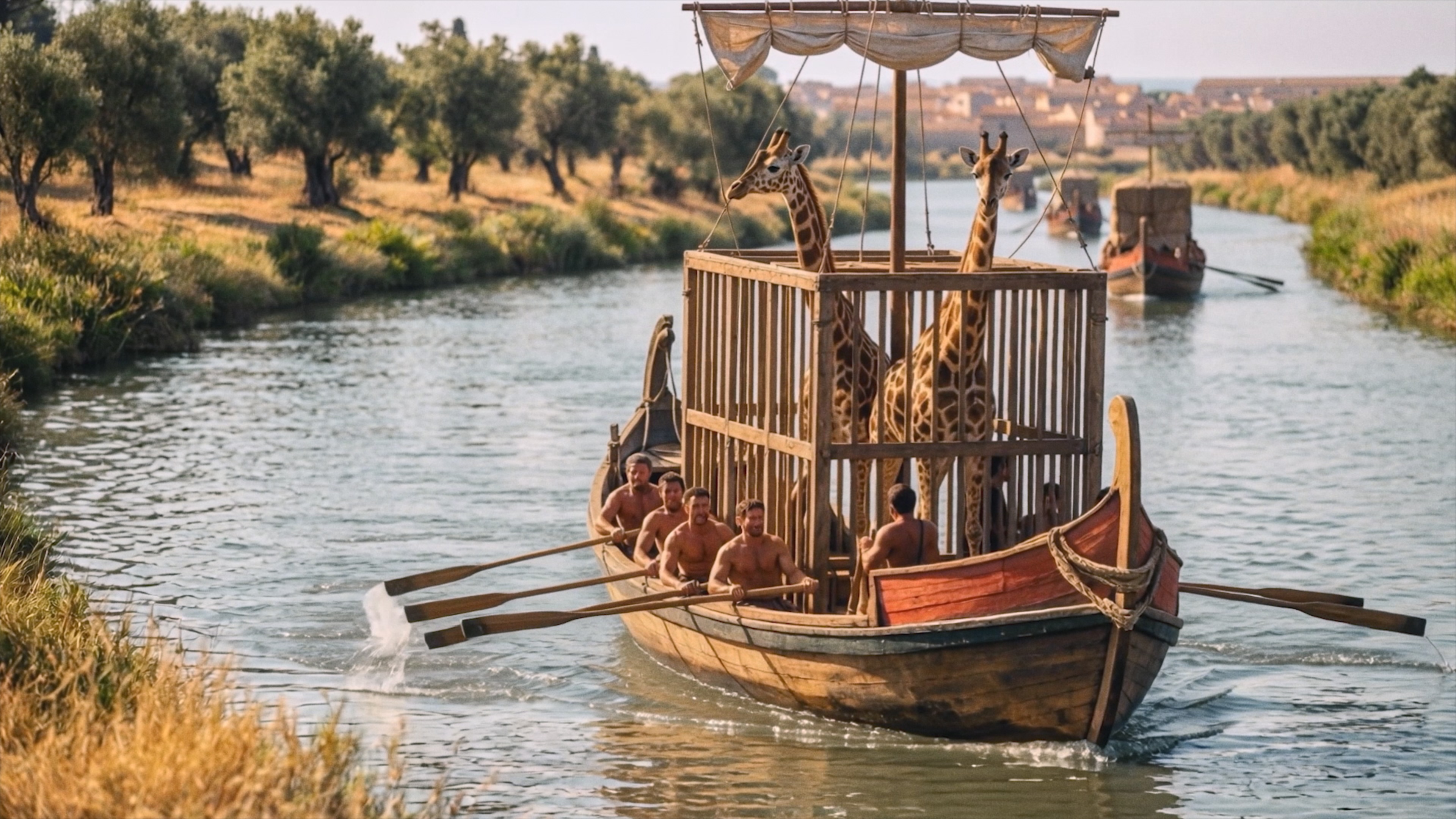
The film shows how this system contributed to the extinction of certain animal species. Was it important to you to draw parallels between this ancient story and current environmental issues?
E.C.: That was actually one of the essential aspects of the project. Behind this two-thousand-year-old story lies profoundly contemporary questions: the place humans assign to animals, the way in which humans exploit them, and the consequences of this domination on natural balances and, ultimately, on humans' own existence.
What strikes me is just how much history repeats itself. Two thousand years later, we continue to exploit nature as though its resources are inexhaustible, forgetting that our own survival also depends on that of other species. Everything is connected.
However, the point was not to pass judgement on the Romans from our modern-day perspective, but to show that the consequences of human activity on the living world did not begin with the Industrial Age.
It was this resonance that struck me as particularly powerful: telling an ancient story that, beyond its spectacular nature, holds up a mirror to our own relationship with nature.
The story is told with great historical accuracy and brought to life through the fates of a hunter, a slave, and a lion. How did you conduct the historical and documentary research necessary to make the film?
E.C.: We surrounded ourselves with the best specialists, particularly historians who have dedicated their research to venationes and spectacles in Roman antiquity. Katia Schörle, Hélène Ménard, Philippe Fleury, Christopher Epplett, Jordon Houston, and Éric Teyssier contributed their knowledge and complementary perspectives to help us understand and tell this complex story.
Thanks to our partnership with the city of Arles, we were also able to shoot our experts' segments right in the heart of the arena—the very place where these spectacles took place nearly two thousand years ago.
We also enlisted the help of Thierry Le Portier, a leading expert on wild animals, whose expertise has notably shaped films such as Gladiator, Two Brothers, and Life of Pi. His exceptional knowledge of these animals and his ability to decipher their behavior allowed us to better understand what they might have experienced in extreme situations and how they were likely to react—sometimes very differently from what we see in movies. His insight was essential for avoiding anthropomorphism and bringing greater accuracy and credibility to our narrative.
Éric Teyssier also worked directly with our AI teams during the production of the reenactments, ensuring that the scenes were consistent with the knowledge of the time.
History inevitably contains areas of uncertainty, and any reenactment involves a degree of interpretation. But we relied on the most solid evidence to construct a narrative that is at once accessible, credible, and spectacular.
AI plays an important role in the film, particularly in recreating the era and locations depicted and enhancing the viewer’s immersion. How did you integrate this technology into the documentary’s creative and production process?
E.C.: Artificial intelligence was crucial: without it, this film simply would not have been feasible given the documentary’s budget and resources.
Within AH! Production, we developed our own methodology, based on a series of stages involving creation, production, and validation. We don’t claim to have the perfect method, especially since these technologies are evolving at a remarkable pace.
Our strength lies in the complementary skills and experiences of our team, which brings together expertise from documentary filmmaking, fiction, live programming, and technical audiovisual fields. This diversity enriches our approach and allows us to combine different methods and perspectives.
AI remains a tool in the service of storytelling—never an end in itself. It’s all in the recipe! And just like Coca-Cola, we have our secret ingredient… but don’t bother asking us for the formula—not even ChatGPT knows it!
More broadly, what can AI contribute to historical documentaries? Have you noticed any particular interest in this approach from international broadcasters and partners?
Christophe Bochnacki: Yes, definitely. I meet many international buyers who are very enthusiastic about the possibilities AI opens up for historical reenactments. After the film's screening at the Unifrance Rendez-Vous in Le Havre, several of them told me that they felt its use in the film was particularly justified by the narrative, which echoes what Enora has said.

In this case, it allows us to recreate vanished worlds, but also situations that are very complex to bring to life on screen—such as elephant or lion hunts, or the transport of wild animals by boat—with a visual ambition and a degree of immersion that were previously very difficult to achieve within the constraints of documentary filmmaking.
But what interests me most of all, beyond the tool itself, is its ability to transform the way we tell stories. AI gives us the opportunity to revitalize the craft of historical documentary filmmaking, making it more vivid and accessible—especially to younger generations. For us, as producers and distributors, this is a tremendous opportunity to reinvent the genre and broaden its audience.
This evolution, however, must be accompanied by high editorial standards. Broadcasters are, in fact, very attentive to this: the use of AI must serve a genuine narrative purpose, be carefully controlled, and be grounded in rigorous historical research. It remains a tool at the service of filmmakers, historians, and storytelling.
This, in my view, is where a new generation of documentaries can emerge: spectacular and entertaining films that make no compromises when it comes to substance. The real challenge, ultimately, is to make the viewer forget the technology being used, so that they can simply let themselves be swept away by the story.
Before the Unifrance Rendez-Vous in Le Havre,Beasts of the Colosseum had already secured its first international sales, notably in Italy with Mediaset, in Germany with ZDF/Terra X, in Sweden with SVT, and in Canada with Radio-Canada. Has the program since been sold in other territories? And what are your current ambitions for its international reach?
C.B.: Yes, and we’re very pleased with the momentum the film has gained since the Unifrance Rendez-Vous in Le Havre. In addition to the initial acquisitions, we’ve since secured deals with RTS, RSI, Česká Televize, Slovak TV, and Dox TV. Other discussions are currently in the process of being finalized.
These sales in very different markets and to a wide range of broadcasters confirm, in my view, the film’s international potential. Beasts of the Colosseum features a subject that is instantly recognizable around the world—ancient Rome—while telling a largely unknown story that also resonates deeply with contemporary audiences through its environmental dimension. Added to this is a visual ambition that allows it to reach beyond the traditional audience for historical documentaries.
Our goal now is to continue this rollout in the Middle East and Asia, and to make Beasts of the Colosseum one of the spearheads of this new generation of historical documentaries that we at Balanga hope to support.