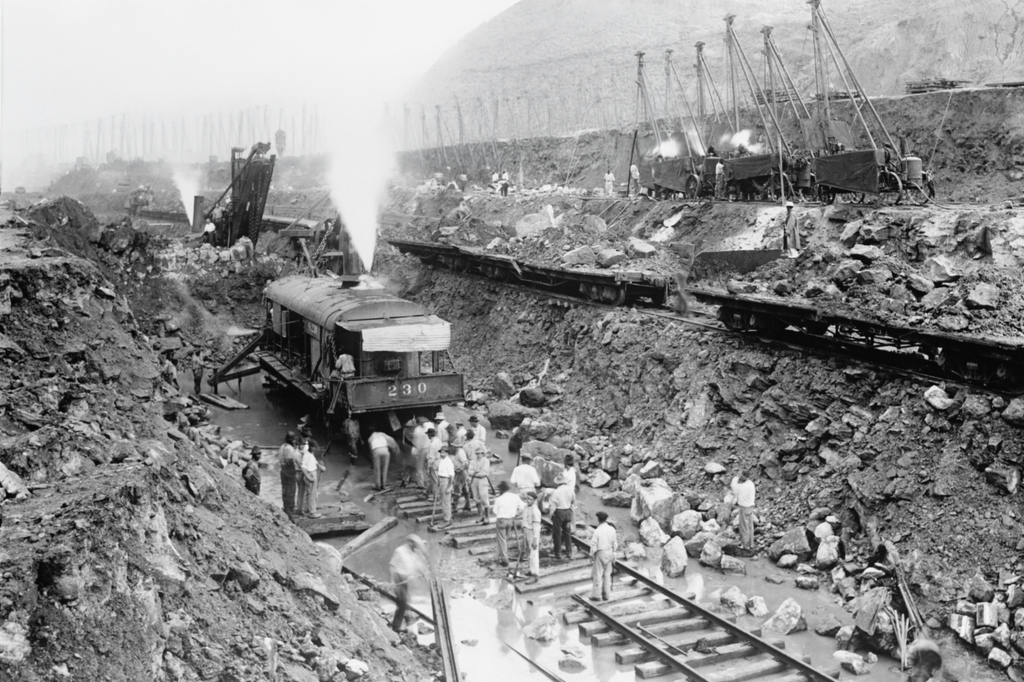
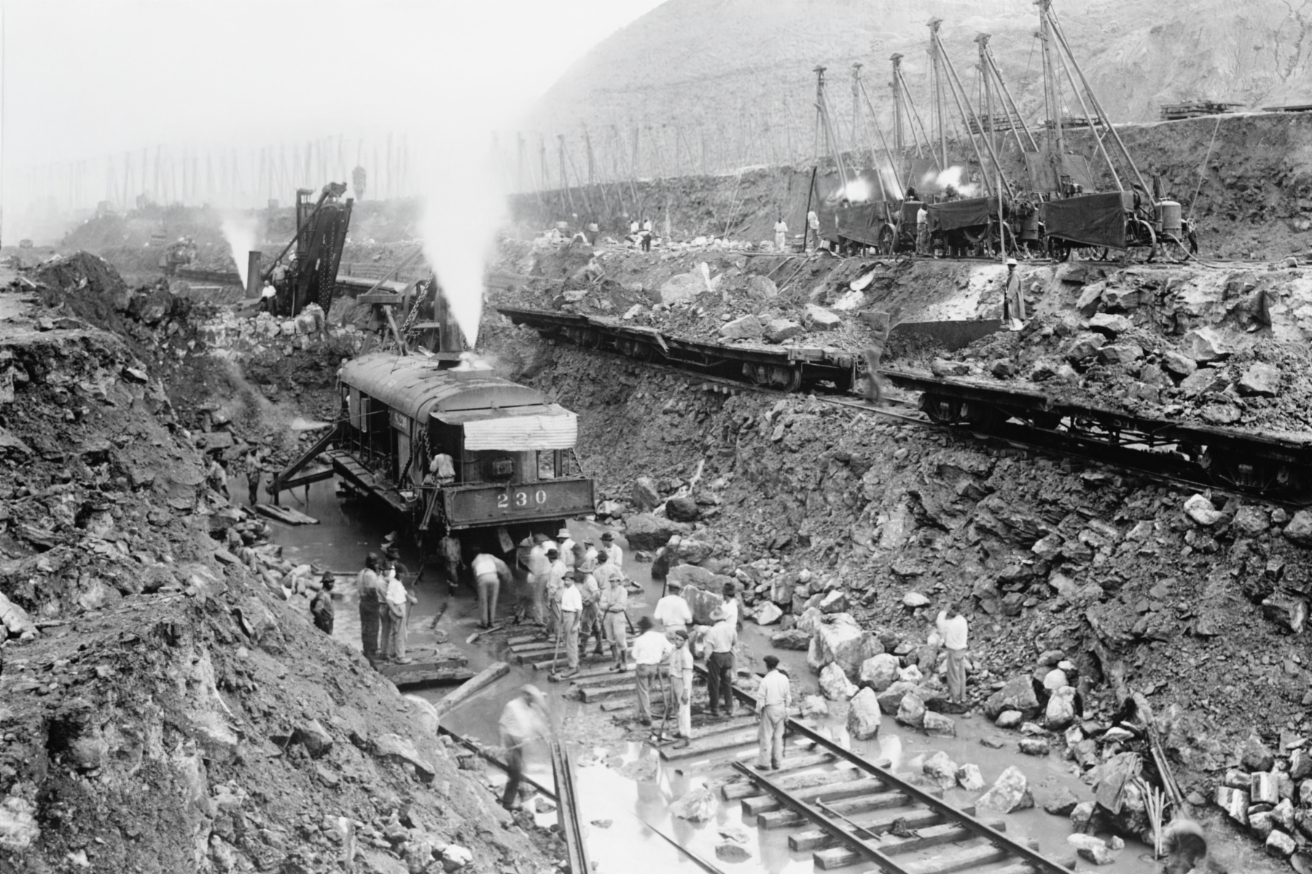
In 1914, the Panama Canal transformed global trade by linking the Atlantic & Pacific oceans together, thus bypassing Cape Horn. Though celebrated as an American achievement, it overshadowed the harsh working conditions and segregation endured by thousands of laborers.
Officially opened in 1914, the Panama Canal changed the face of the world by linking the Atlantic and Pacific oceans together. This passage through the middle of Central America had been something men had dreamed of since Christopher Columbus. But it wasn't until the end of the 19th century that Ferdinand de Lesseps tackled such an undertaking. His attempt failed, as he underestimated the difficulties that came along with such a project. It was then that President Theodore Roosevelt's United States took over and completed this massive construction project, so useful to their trade. Although History remembers the technical feat of the Panama Canal, the failure of the French and the success of almighty America, it overlooked the countless workers who came to sweat, and often die, to defeat the elements. The workers discovered misery, slave-like working conditions and a segregationist system set up by the American administration in the hell of Panama.