
André the Magnificent

Synopsis
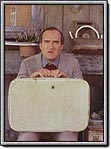
A couple from Vigoule, a small town in France's south-west, attempts to save the small municipal theater from destruction, by giving an amateur show about the town's history and its founder, the knight Sainte-Germaine. Alexis, the local teacher and show's author, and his wife Janine, are assisted by Norbert aka "Mr Handyman," and André, the municipal gardener. They perform the respective roles of prompt and theater security guard. In order to attract a big audience, they've employed a professional actor from the big smoke of Paris, Jean-Pascal Faix, who in turn is attracted by the "true country" experience. If all goes according to plan, he'll play the lead role of Sainte-Germaine…
Credits

Actors (7)


Production and distribution (3)
- Executive Producers : Noé Productions Int., André Productions
- Film exports/foreign sales : STUDIO TF1 Cinéma
- French distribution : Fox France
Full credits (16)
- Screenwriters : Isabelle Candelier, Loïc Houdré, Gilles Laurent, Jean-Luc Porraz, Emmanuel Silvestre, Michel Vuillermoz, Patrick Ligardes, Thibault Staib
- Director of Photography : Florent Herry
- Music Composer : Pascal Comelade
- Assistant directors : Jean-Philippe Blime, Christelle Lamarre
- Editor : Etienne Perruchon
- Sound Recordist : Jean Minondo
- Costume designer : Juliette Chanaud
- Line Producers : Marc Baschet, Daniela Romano, Frédérique Dumas
- Assistant Operator : Julien Bureau
- Production managers : Sylvain Monod, Mathieu Bompoint
- Press Attachés (film) : Myriam Bruguière, Olivier Guigues
- Sound editor : Annette Dutertre
- Assistant editor : Frédérique Veillard
- Production Designer : Mathieu Menut
- Sound Mixer : Jean-Paul Hurier
- Still Photographer : Jean-Claude Lother
Media Gallery

Technical details
- Type : Feature film
- Genres : Fiction
- Sub-genre : Comedy
- Themes : Monde rural, Theater
- Production language : French
- Original French-language productions : Yes
- Nationality : 100% French
- Production year : 2000
- French release : 26/04/2000
- Runtime : 1 h 29 min
- Current status : Released
- Visa number : 97.306
- Visa issue date : 20/03/2000
- Approval : Yes
- Production formats : 35mm
- Color type : Color
- Audio format : Dolby SRD
Box-office & releases
Box Office
This content is for registered users only.
Are you a member? Please login to view content.
International releases
| Country | Distributor | Buyer | Release date | Titre local |
|---|
Sorry, your search returned no results.
TV broadcasting
This content is for registered users only.
Are you a member? Please login to view content.
News & awards
Selections (2)

About
Early ’98: We go to the theater to see “André le Magnifique.” The author-actors are great. Laughter, emotion, a hit. July: The theater company contacts us, because they want to adapt the play for the screen. We first met at the Maison des Auteurs. There were five of them, pretty much our age. They wanted to write the first draft themselves. September: They get back in touch, we read what they’ve written, then we all get together again. We offer our opinions, enthusiastic yet also critical. They listen, impassive. It felt like an oral exam. We left the meeting satisfied but uncertain. They were supposed to give us an answer in a week, since they were seeing other directors. We were still chatting among ourselves on the sidewalk when a cell phone rang: it was them, they didn’t want to wait a week, they wanted to work with us. Jubilation. Then everything moved fast. The package and financing came together quickly. November ’98 – February ’99: The screenplay got written, sometimes by seven of us, which was no joke. May – June: Rehearsals and preparations. July – August: The shoot. Then post-production took us to Christmas. Making a film seems like an endless tunnel. January 2000: “André” was finished. We were delighted, but a little comatose, too. Each stage in the process subtly altered and enhanced the overall look of the piece. April: A provincial tour – good audience reactions, relief. A special jury prize at the Paris Film Festival. The reviews are basically good. April 26, 2000: National release (at last!). Competing alongside fourteen other releases, “André” doesn’t pull in the audiences we’d expected. A real shock. We’re sad and disappointed. Apparently that’s the rules of the game – a cruel, euphoric and also absurd game: two years of work for a couple of weeks on the screen. But it remains an incomparable experience. Time has now gone by and one thing has stuck with us: we love this movie and we’re proud of it. In the end, that’s the main thing
Thibault Staib, Emmanuel Sylvestre, Directors