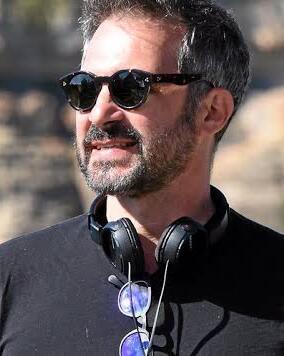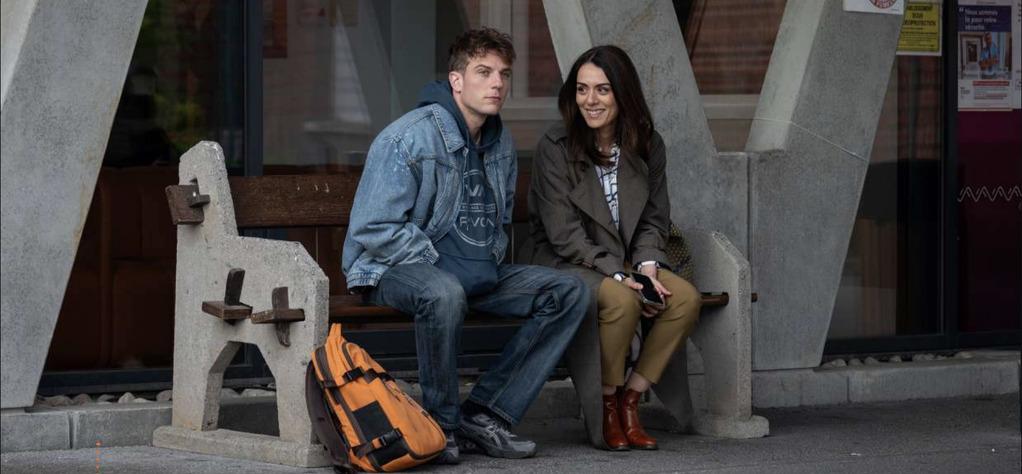
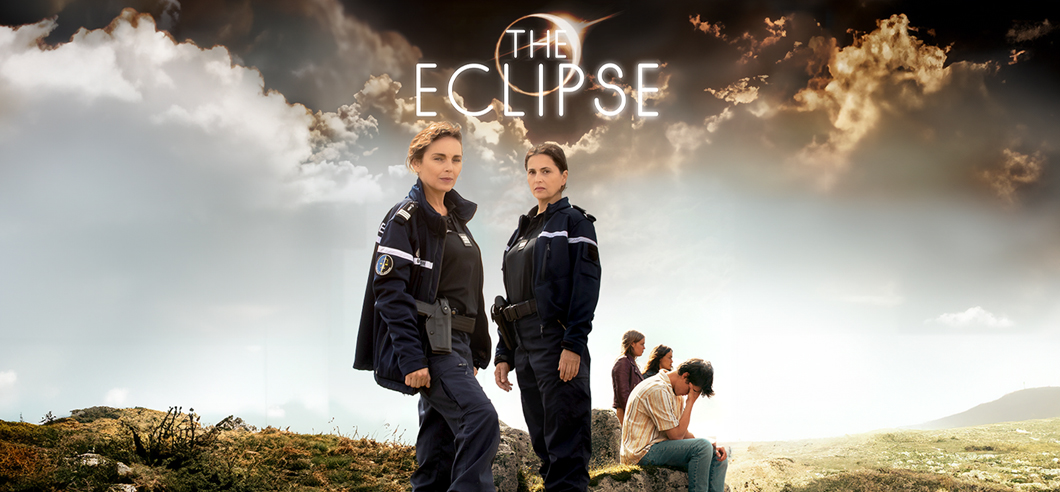

Part intimate drama, part thrilling investigation, The Eclipse takes the audience to the heart of a village in the Aubrac region. shaken by the mysterious disappearance of a young woman during a solar eclipse. Led by a powerful female police duo, this six-episode series—created by Céline Lorne, Hélène Duchateau,and Baptiste Filleul, and directed by Franck Brett—explores how a tragic event fractures a close-knit rural community, revealing family rivalries, tensions generated by an inheritance, and social divisions.
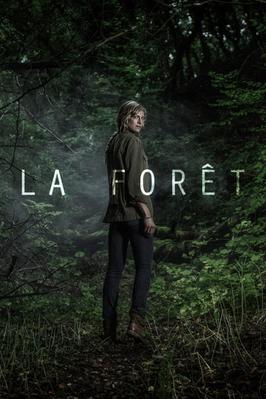
Set in an enclosed, clautrophobic world under the open sky, the story draws on the majestic landscapes of the Haut Plateau de l'Aubrac, which amplify the mystery and reflect the characters' torments. Produced in 2024 by Carma Films for France Télévisions and distributed by About Premium Content, The Eclipse follows in the footsteps of The Forest, pursuing the ambition to transport viewers to new places and breathe new life into French crime fiction.
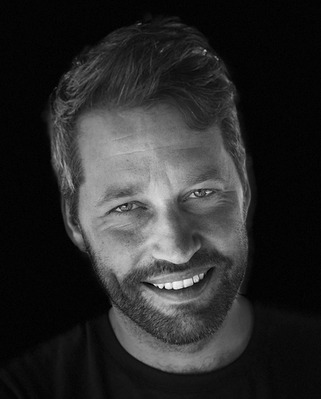
Producer Christophe Carmona (Carma Films) and distributor Emmanuelle Guilbart (About Premium Content) look back on the making of the series, the universal and intergenerational appeal of the story that has traveled far beyond borders, and the development of a future project that will continue the momentum.
Unifrance: How did The Eclipse project come about, and how did the collaboration between France 2, Carma Films, and About Premium Content come together?
Christophe Carmona (Carma Films): The Eclipse arose from a very simple desire: to give crime fiction a new twist, to confront a predominantly urban genre with a rural world undergoing rapid change. And all this while exploring rural life in its current, diverse form, between neo-rural dwellers (often former city dwellers who fantasize about returning to the land) and traditional farmers whose relationship with the land is very different.
The second guiding principle was to compose a transgenerational picture within a micro-society, and to use the investigation as a means of exploring family ties, legacies, and intimate divisions. It was a way of extending the fundamentals we had laid down with The Forest, our previous production for France Télévisions, but going even further into the social and the intimate realms.
France 2 immediately embraced this approach, and development naturally began with them. In addition, we had a long history of collaboration and loyalty with About Premium Content, which made the idea of a partnership an obvious one. It was thanks to the support and trust of the teams at France Télévisions and About Premium Content (Emmanuelle Guilbart and Laurent Boissel) that we were able to lay the foundations for this adventure and give The Eclipse the scope it deserves.
The Eclipse tells the story of a young woman who disappears on the night of an eclipse in Aveyron, and focuses on the investigation led by two female police officers, who are themselves mothers of children involved in the tragedy. Was it your intention to breathe new life into the French crime genre by placing two heroines at the center of the story, who are police officers, mothers, friends, and rooted in a rural area?
CC: Yes, that was exactly our idea. For us, the crime story is a pretext, a vehicle for exploring human relationships, particularly within families, whether nuclear or elective. What matters to us are the secrets, contradictions, and gray areas of the characters: how a tragic event fractures a group that seemed united.
The aim was therefore to explore a very small community: people who live together, who share roots and a common past, who know each other intimately. All of this shapes their relationships and makes the mystery of the starting point even more compelling. In the field, during questioning, the investigators are never faced with strangers; they are members of the same community who find themselves forced to confront each other. And right up to the end, we chose to involve our heroines themselves, whose lives and children are entangled in the drama.
The landscapes of the Haut Plateau de l'Aubrac play an essential role in the series, accentuating the mystery and giving it a unique atmosphere. What role(s) did you want this setting to play?
CC: The landscapes of the Haut Plateau de l'Aubrac play a central role in the series. It's an area I know well, since I grew up there, and I knew that no one had ever filmed there before. I knew by heart the incredible cinematic power of these places. I wanted to turn them into an arena, a stage, a real character in its own right.
I wanted to create an open-air closed setting, where nature, because it is at once majestic, naive, and disturbing in this location, would catalyze the tension of the story and breathe life into it. Franck Brett and Magaly Sylvestre de Sacy captured this power with exceptional skill, transforming each shot into an echo of the characters' secrets and emotions.
The Eclipse explores family secrets, conflicts of interest, and complex relationships that disrupt the protagonists' families. Did you also want the series to examine intergenerational relationships and the challenges of passing on traditions? Does this make the series more accessible to foreign audiences?
CC: The question of inheritance and transmission is at the heart of The Eclipse. The series recounts the tensions between those who want to leave and those who want to take over the farms, between the rebels and the prodigal sons. These family tensions shape every relationship and every choice.
The series was a huge hit in France on France 2, as well as in Belgium (RTBF) and Switzerland (RTS). Could you tell us about its international reach and what particularly appealed to foreign partners?
Emmanuelle Guilbart (About Premium Content):We are delighted to have sold the series in around 40 territories, with broadcast partners such as Acorn TV (North America, Australia, New Zealand), TVP (Poland), Walter Presents (UK), RTP (Portugal), and Telecom Flow (Latin America).
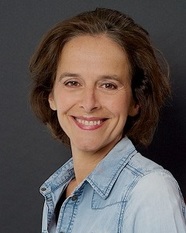
The aforementioned powerful setting of Aubrac, coupled with the universal image of the eclipse as the starting point for the series, certainly helped, as did the finely wrought investigation led by a pair of female police officers who are close colleagues and friends—which is rare in this genre—played with charisma by Anne Charrier and Claire Keim.
What are your ambitions for the future?
CC: We are currently working on what could be seen as the third part of a trilogy that isn't really one: after The Forest and The Eclipse, we are developing La Source (The Spring).
We are fortunate to once again have the support of the teams at France Télévisions, and in particular of Anne Holmes, Stéphane Massard, and Julia Girot, who are accompanying us on this new adventure.
With La Source, we will continue to explore intergenerational relationships, but this time in a powerful new setting: the Vercors mountains. This is a magnificent but fragile region, hit hard by global warming, where economic and social balances have been thrown out of sync. What interests us is the parallel between global disturbance, that of nature, and intimate disturbance: that of male-female and father-daughter relationships. It is this double fracture that we want to highlight in this upcoming project.