L'Amour aurait suffi même à Nietzsche

Synopsis
"A man is playing tennis against a wall, whose function is to return the ball to the solitary player. Albeit this man isn’t really alone before the wall. His dog is playing with him, trying to steal the bouncing ball, both of them obviously happy to undermine the dreary logic of "go fetch", and the unchangeable roles of the throwing master and the fetching dog. The man is Pierre Creton and the dog is called Tobie, and this opening scene can also be interpreted as a nod to tennis-playing Godard, who often complained about lacking partners in cinema to throw the ball back at him. (Just picture an elderly Godard, playing tennis against a wall with his dog Roxy.)
This solitude for two opens a film that Pierre Creton describes as the portrait of a book – a new genre in cinema. The model is entitled L’Éternel Retour, and its author, Michel Surya, also professed its unprecedented nature when it was published in 2006 - it was a "novel of thought", the ultimate stage of a genre in which action is replaced by an event of thought capable of engaging the entirety of existence. The thought in question is the Nietzschean concept of the “eternal return”, that its author considered the “highest thought”: "He says, Surya wrote, "that one must love everything to the point of being able to love, one day, when the time comes, its return." For Pierre Creton, creating a cinematic portrait of the book means establishing this thought as the highest ideal in his work, and letting it encompass his entire existence – which, in his case, amounts to the same thing.
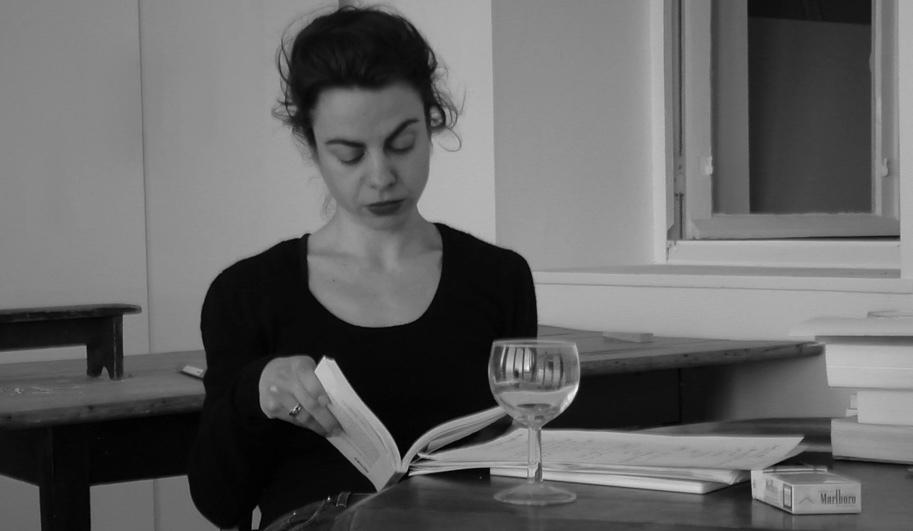
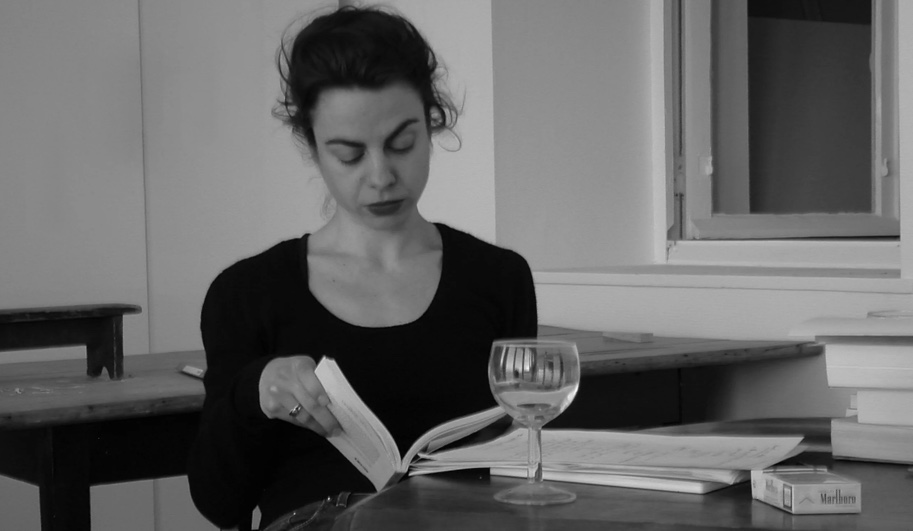
The film continues inside a house, facing the sea and its silent undulations beyond the picture window. We can hear snatches of a conversation about the novel, then Léo Ferré singing La Mémoire et la Mer. Then we leave behind the ocean view to look at and listen to a woman reading an extract of the book. "(…) In other words, he said, all things return eventually, provided that we have loved them enough." On the couch, between the takes that bring back the reading of the text, the sentences heard better each time, their meaning better understood -so sublime, so scandalous- the dog and the cat love each other in slow motion, as if in a memory. Then we recognise Françoise Lebrun’s voice as she picks up the reading of Surya’s novel in a voiceover. Then it’s the same voice, only younger, in a film by Marguerite Duras.
Meanwhile, evening falls, daylight fades, the sea turns black – a promise of sleep and dreams, a foretaste of death and return, of the eternal return of the ghost. On the black screen that goes down before the image of the sea and covers it, Pierre Creton’s entire work is then projected once more; along with all his loved ones, human or otherwise, but always the reasons why he made these films in the first place: Jean Lambert, Marcel Pilate, Mathilde Girard, Françoise Lebrun, Toto, Tobie and Bataille, Juha and Albertine, the living and the dead already reunited at the end of Un prince, and all the others. This film is deeply moving because it articulates Pierre Creton’s secret: a desperate wish for everything to return."
(Cyril Neyrat - FIDMarseille)
Credits
Director (1)

Production and distribution (2)
- Executive Producer : Maison Lambert
- Film exports/foreign sales : Maison Lambert
Full credits (2)
- Executive Producer : Pierre Creton
- Screenwriter : Pierre Creton
Media Gallery
Technical details
- Type : TV programme
- Genres : Documentary
- Sub-genre : Documentary
- Themes : Philosophy, Literature, Love
- Production country : France
- Nationality : 100% French (France)
- Production year : 2026
- Runtime : 25 min
- Color type : Black & White
News & awards
About
CNAP (National Centre For Visual Arts) Award at the FIDMarseille 2026