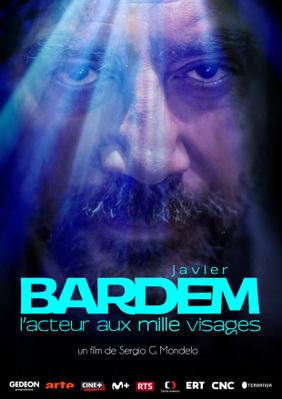

From a rising star in 1990s Spain to an international superstar, Javier Bardem has established himself as one of the most unpredictable and eclectic actors of his generation, capable of navigating between arthouse cinema and Hollywood productions without ever losing touch with his European roots. The documentary Javier Bardem's Metamorphosis, directed by the Franco-Spanish filmmaker Sergio Mondelo, traces this extraordinary journey, marked by bold choices and radical transformations.
Drawing on a rich tapestry of archival footage, film clips, behind-the-scenes footage, and exclusive interviews with his family and collaborators, the film offers an intimate look at the creative process of this chameleon-like actor. It also reveals a lesser-known side of him: that of a man committed to artistic, political, and environmental causes, in keeping with his family history—a stance that sometimes goes against the grain in the industry.
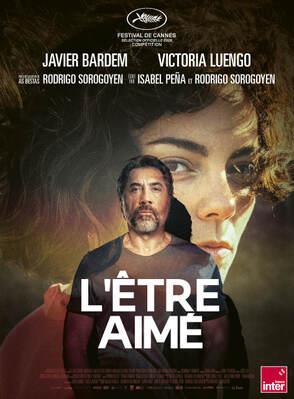
To mark the inclusion in Competition at the Cannes Film Festival of Rodrigo Sorogoyen's The Beloved, in which Bardem stars, we take a look back at this documentary—as profound as its subject—and its international journey since its broadcast on ARTE in 2023. Director Sergio Mondelo, producer Valérie Guerin of Gedeon Media Group, and Isabelle Graziadey, deputy director of sales and acquisitions at Terranoa, agreed to answer our questions.
Unifrance: Could you tell us about the origins of this ambitious project?
Valérie Guerin: The documentary was submitted to Arte as part of the Documania series, dedicated to major figures in cinema.
The project arose from a strong conviction: Javier Bardem is one of the most complex, intense, and misunderstood figures in world cinema. We know the Oscar-winning actor for films like No Country for Old Men and Biutiful. But behind these memorable roles lies a man shaped by a Spain in the midst of profound change, and by a family history deeply rooted in Spanish film culture. To understand the actor is also to trace his origins back to this rich and unique context, which conveys a powerful and original narrative.
This personality also opened the door to a potential co-production with Spain. Although the collaboration with RTVE did not come to fruition, we entered into a partnership with Movistar, Spain’s leading film channel.
Sergio Mondelo quickly emerged as the ideal choice to lead this project. A Franco-Spanish director who divides his time between Paris and Spain, he has always placed Spanish culture at the center of his documentary work: Almodovar, tout sur mes femmes (Arte, 2016), Ava Gardner, la gitane d’Hollywood (Arte, 2018), and Dali, l'homme qui aimait les muses (France 5, 2014).
Working on a figure of this stature was a real challenge. The goal was not to deliver a hagiographic portrait, but rather to create a more organic and sensual film, capable of revealing the shadows and contradictions of an artist in a constant state of searching. The film’s remarkable visual design fully supports this intention.
Bardem is, moreover, the quintessential anti-star: he effaces himself in his roles, constantly transforming and reinventing himself. A question quickly arose: how do you tell the story of a figure who disappears into the characters he portrays? Mondelo thus chose to focus on Bardem's work as an actor, on the technical aspects of his art. This involved meeting with people who had accompanied him on his journey.
Thanks to a collaboration with a Spanish production company, we were able to bring together key figures: his first teacher, Juan Carlos Corazza, who played a pivotal role in his training, as well as longtime collaborators such as Fernando Leon De Aranoa and Álvaro Longoria. His cousin Miguel Bardem offers a more intimate, almost familial perspective on his career.
Javier Bardem comes across as a chameleon-like actor, known for his bold artistic choices and striking physical transformations. Was it the actor’s “thousand faces” that you wanted to showcase above all else?
Sergio Mondelo: After revisiting much of his filmography, one theme stood out: the multifaceted nature of his acting, his ability to completely transform himself in every film—a true chameleon in front of the camera. Film after film, he seems to shed his own identity to take on that of his characters, as though each role offered him a new incarnation.
In No Country for Old Men, he becomes a methodical and chilling killer, almost spectral; in Biutiful, he takes on the role of a broken father, consumed by raw humanity; in The Sea Inside, he transforms into a man immobilized by his condition, yet possessing a deeply moving intensity; and in Skyfall, he adopts a poisonous flamboyance that is uniquely his own. This ability to constantly reinvent himself makes him an elusive performer, never where you expect him to be.
And then, just for the record, on a global scale, he must be the actor with the most spectacular hair transformations!
To tell the story of this perilous journey, I was able to convince Bardem’s first drama teacher—the man who broke through his shell and awakened the born showman that lay dormant within him—Juan Carlos Corazza. Then there are directors like Fernando León de Aranoa, who holds a special place in his career: with Mondays In The Sun, Loving Pablo, and The Good Boss, three films among some twenty major collaborations. He watched the actor blossom, transform, and then fully assert his genius.
At his side, director and producer Álvaro Longoria, a longtime collaborator, has also been part of this rise, a privileged witness to a journey—both cinematic and political—in which each role seemed to push the boundaries of what was possible.
But even as I was writing the film, another aspect of the character struck me as essential: situating Javier’s journey within the Bardem family lineage, a true artistic dynasty that has profoundly shaped the history of Spanish cinema. The contribution of his cousin Miguel Bardem, son of the great director Juan Antonio Bardem, was decisive: as an intimate witness to this dynasty, he sheds light from the inside on how Javier grew up amidst film sets, struggles, and convictions, and how this family legacy shaped the actor he has become.

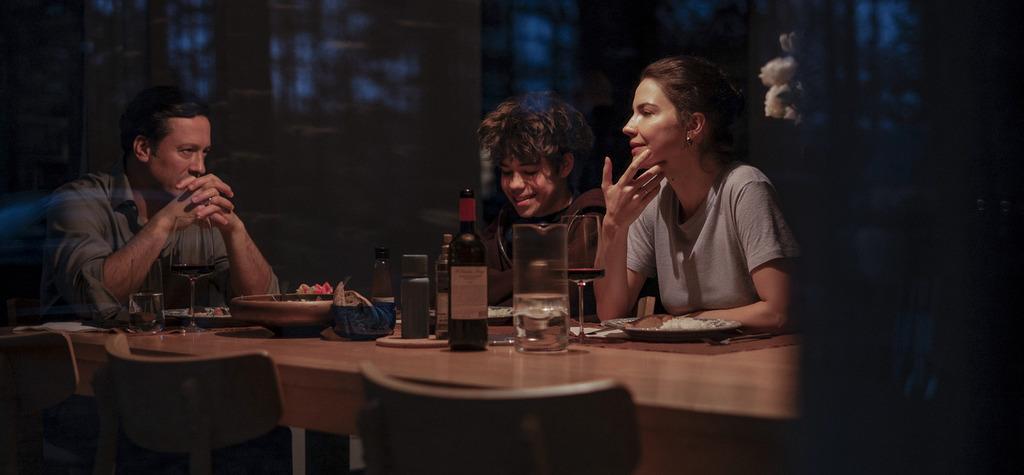
© Gedeon Programmes / Lola Films
Viewers learn about his career through a collection of film clips, behind-the-scenes footage, and interviews with the actor himself, as well as with several of his close friends and collaborators, as you just mentioned. How was this research and information-gathering process undertaken?
SM: I was able to rely on a strong Franco-Spanish team to handle the scheduling of the interviews, which was never an easy task, given the busy schedules of the people we approached.
As for the image research, that’s undoubtedly the aspect I’m most proud of: it revealed a veritable visual goldmine, completely exclusive, consisting of twenty years of behind-the-scenes footage shot by one of the leading Spanish correspondents in Hollywood. These images offer a unique perspective on the hidden reality: they show Javier Bardem’s media impact, his spectacular rise over the years, through films and international successes, further amplified by his marriage to Penélope Cruz.They allow us to follow, almost step by step, the way Hollywood adopted, observed, and scrutinized him.
The film also highlights his artistic, political, and environmental commitment, which is in keeping with his family history, despite criticism from the industry and the media. Why was it essential for you to explore this aspect?
SM: Because this political commitment is integral to his character and reveals his deep-seated attachment to the causes his family has championed for generations, as well as the consequences his stances have had on his career, his filmography, and his relationships—particularly with major American studios. Without this commitment, his trajectory would undeniably have been different. Whether it would have been better or not is not the question. What matters is that one cannot speak of Javier Bardem—neither the actor nor the man—without addressing this political dimension that informs his choices.
The documentary has been a huge international success. Could you tell us more about its release and reception abroad? Did you expect such interest, particularly given that Bardem’s fame was already so well established?
Isabelle Graziadey: Yes, this multi-award-winning artist is fascinating but keeps a low profile off-screen and protects his privacy. There had been no documentary chronicling his career and his evolution as an actor.

That is why Movistar quickly joined in financing this film in 2023, followed by RTVE in the secondary window, capitalizing on the 2022 release of Fernando León de Aranoa’s film The Good Boss and the current buzz surrounding Bardem.
Since then, the film has been sold in more than 17 territories, including DRTV, Asharq News Service, Slovenia, Estonia, Serbia, Lithuania, Poland, Greece, Portugal, Belgium, Canada, the Netherlands, New Zealand, and Mexico. This enthusiasm attests to the popularity of this cinema icon and the quality of this portrait, rich in rare or previously unseen archival footage and exclusive interviews. Broadcasters were also drawn to the film’s aesthetic, which perfectly captures the man and his culture
Bardem is in the spotlight at this year’s Cannes Film Festival with Rodrigo Sorogoyen’s film The Beloved. Does this situation provide an additional opportunity to boost the documentary’s international visibility?
IG: Yes, of course, especially since his role as Stilgar in Dune has made him even more popular. He is continuing his career with great success and is using his media exposure to champion causes close to his heart, as evidenced by his recent speech at the Oscars. This rich and in-depth portrait reveals Bardem in all his facets, both as an artist and as a committed citizen..

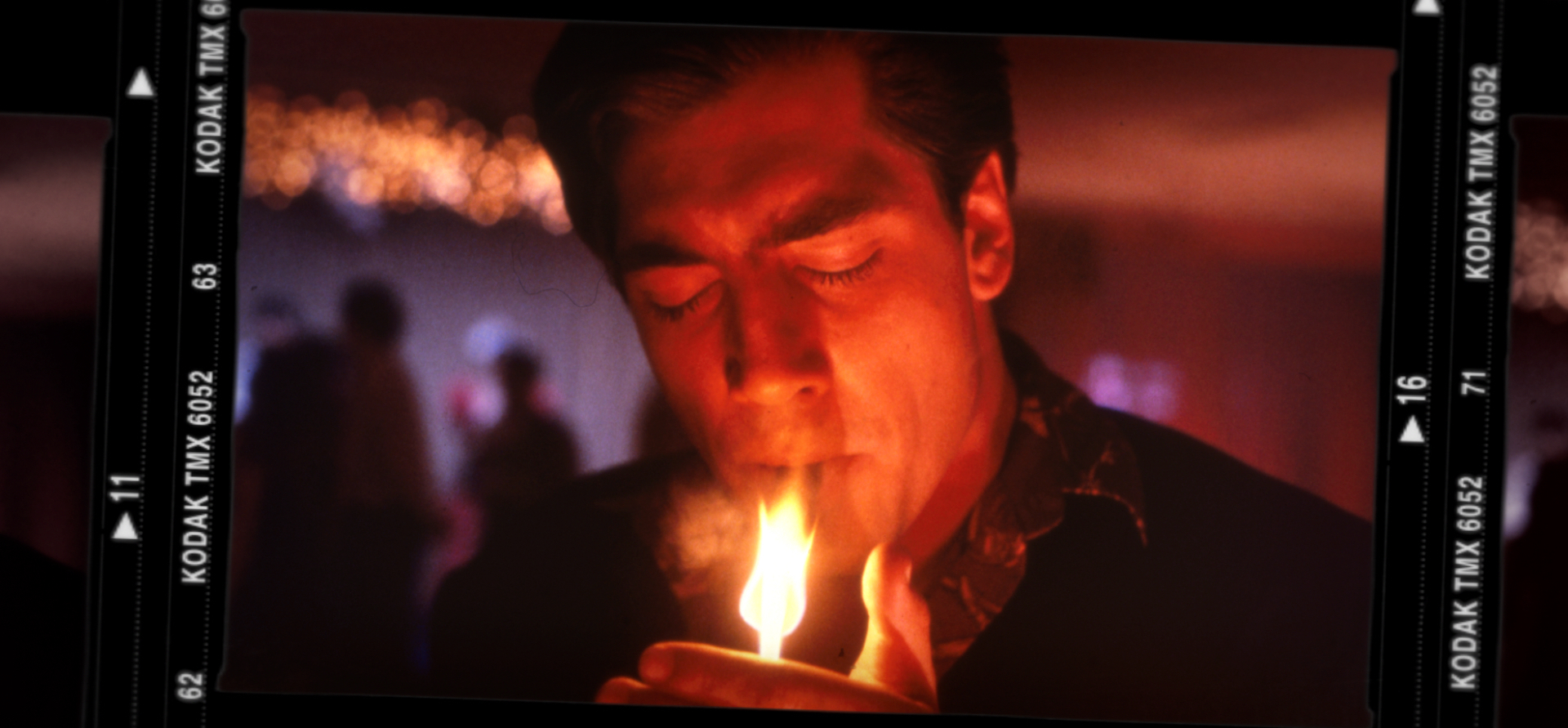
© Gedeon Programmes / Morena Films & Pinguin Films