

Synopsis
Some years after her husband, Dave, ran off with her sister, Sally Matthews finds herself working in a casino in Atlantic City. One day, Dave and her sister turn up on her doorstep, looking for a place to stay. Unbeknown to Sally, Dave has intercepted a stash of drugs which he intends to push in Atlantic City, with the help of Sally’s neighbour, an ageing one-time gangster named Lou. When Dave is killed by the crooks from whom he stole the drugs, Lou decides to take Sally under his wing, abandoning Kate, an old widow he has been looking after for the past few decades. Lou and Sally seem to have it made – until the gangsters catch up with them...
Source : cinemaforever.com
Credits
Director (1)



Production and distribution (5)
- Executive Producer : Selta Films
- Co-productions : NEF - Nouvelles Éditions de Films, France 3 Cinéma
- Foreign production company : Cine Neighbor Inc.
- Film exports/foreign sales : Gaumont
- French distribution : NPF Planfilm
Full credits (9)
- Screenwriter : John Guare
- Director of Photography : Richard Ciupka
- Music Composer : Michel Legrand
- Editor : Suzanne Baron
- Sound Recordist : Jean-Claude Laureux
- Foreign producers : Justine Héroux, Denis Héroux
- Associate producer : Justine Héroux
- Production designer : Anne Pritchard
- Sound Mixer : Jacques Maumont
Watch this movie
Watch Atlantic City in VOD
| Platforms | Model | Price | Quality |
|---|
Sorry, your search returned no results.
| Platforms | Model | Price | Quality |
|---|
Sorry, your search returned no results.
| Platforms | Model | Price | Quality |
|---|
Sorry, your search returned no results.
| Platforms | Model | Price | Quality |
|---|
Sorry, your search returned no results.

Media Gallery

Technical details
- Type : Feature film
- Genres : Fiction
- Sub-genre : Drama
- Themes : Games
- Production language : English, French
- Coproducer countries : France, Canada
- Original French-language productions : Unspecified
- Nationality : 100% French (France, Canada)
- Production year : 1980
- French release : 03/09/1980
- Runtime : 1 h 44 min
- Current status : Released
- Visa number : 51625
- Visa issue date : 17/09/1980
- Approval : Unknown
- Production formats : 35mm
- Color type : Color
- Aspect ratio : 1.85
- Audio format : Mono
Box-office & releases
TV broadcasting
This content is for registered users only.
Are you a member? Please login to view content.
News & awards
Selections (3)

Cesar Awards - French film industry awards
France, 1981
Best Screenplay (Original or Adapted) : John Guare
Best Original Music : Michel Legrand

Awards (1)
About
Production
Atlantic City was filmed on location in and around Atlantic City and South Jersey, Philadelphia, and New York. Although filmed in the United States, the film was a co-production between companies based in France and Canada. Aside from Burt Lancaster, Susan Sarandon, and local extras, most of the cast originated from Canada or France. The film allowed Canadian actors such as Kate Reid and Al Waxman to successfully transition into American film and television roles.
The production companies alloted Louis Malle the money to make a film with the stipulation that it be made before the year 1979 ended. Malle had a difficult time finding the right script to direct and with time running out his then girlfriend Susan Sarandon suggested using a story written by her friend John Guare, a playwright most notable for his plays House of Blue Leaves and Six Degrees of Separation. Guare suggested that the story take place in Atlantic City, which was still for the most part suffering from the urban deterioration that prompted the legalization of gambling as a solution to save the city. The three met over dinner in early 1979 to work out quirks in the script and began shooting within a few months.
Principal photography commenced on October 31, 1979 and moved swiftly along finishing by December 30, 1979 just in time for the end of the year (a few exterior and location shots were filmed until January 5, 1980). Malle filmed at an opportune time in that he was able to capture old Atlantic City: gambling was still in its early stages there, with only two casino hotels open (Resorts and Caesars; Bally's Park Place would open on December 30, toward the end of the principal photography). Most of the city's old resorts and entertainment piers were still standing, albeit in a severe state of disrepair. Within a couple of years of the filming, most of the these old hotels would fall victim to the wrecking ball as they were replaced with new casinos. To frame the picture, Malle foreshadows the great transition of the famous resort town in the opening credits by featuring footage of the implosion of the once-grand and historic Traymore Hotel on the Atlantic City Boardwalk.
Louis Malle hired composer Michel Legrand to write a score for the film, which he did. In the end, however, Malle decided against using a score for the film, and opted for all the music in the film to be ambient: the only music used is that which exists in the world of the characters (i.e. radios, musical instruments, etc.).
Awards
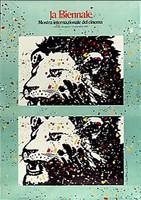
The film won the Golden Lion at the Venice Film Festival in 1980 in a tie with John Cassavetes' Gloria.
Atlantic City was nominated for Academy Awards for Best Actor in a Leading Role (Burt Lancaster), Best Actress in a Leading Role (Susan Sarandon), Best Director, Best Picture and Best Writing, Screenplay Written Directly for the Screen. In 2003, Atlantic City was selected for preservation in the United States National Film Registry by the Library of Congress as being "culturally, historically, or aesthetically significant".
Source : cinemaforever.com